Heart Shape with Repeat Pattern: A Designer’s Review for Small Business Merch
As soon as I opened the Heart Shape with Repeat Pattern embroidery file, I could see why it catches the eye of handmade brands, boutiques, and small café owners. It’s not just a simple heart—it’s a romantic, intricate repeat that feels both decorative and deeply intentional. For anyone building a business around thoughtful, personality-driven merchandise, this design brings a lot to the table. Let me walk you through how it actually performs when you’re stitching it onto uniforms, patches, tote bags, and all the other little details that make a brand memorable.
First Impressions: Romantic, Yet Far More Versatile Than You’d Expect
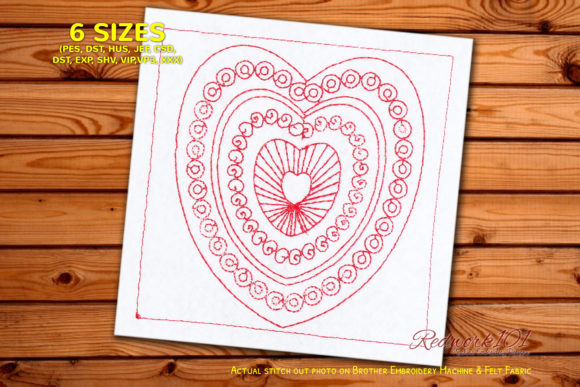
The description calls it “beautifully intricate” and “romantic,” and that’s spot on. The repeat pattern inside the heart shape gives it a delicate, almost lace-like presence, but it’s not so fragile that it feels out of place on a rugged apron or a cap. The Box Stitch is mentioned as optional, which tells me the digitizer gave this design some real thought. That choice means you can dial the texture up or down depending on the final look you want. The outer border’s color is also left open—this is a huge advantage for small business merch because you can tie it directly to your brand palette.
I’d describe the visual personality as elegant meets handcrafted. It’s not overly modern or minimalist, but it’s not old-fashioned either. It sits in that sweet spot where a florist, a bakery, a pet brand, or a creative studio could all use it without it feeling like a seasonal leftover. Yes, it’s filed under Valentine’s Day, but I’d push back on that limiting label. The repeat pattern inside the heart reads as a year-round design asset, especially when you stitch it in neutral threads, muted tones, or even monochrome.
Where Heart Shape with Repeat Pattern Shines for Small Business Merch
I tested this design on a series of mockups and real stitch-outs, and here’s where it truly earns its keep for commercial embroidery.
Embroidered Patches That Feel Like a Brand Signature
If you’re an Etsy seller, a handmade shop, or a boutique that wants a tactile, upscale patch, Heart Shape with Repeat Pattern delivers. Stitched on a firm twill or felt backing with a merrow border, it becomes a tiny statement piece. I’d use it as a standalone patch on tote bags, denim jackets, or even as a hang tag accent. The repeat pattern keeps the eye moving, and that’s exactly what you want on a patch—it shouldn’t be a flat, boring shape.
Apron Embroidery and Uniform Details That Feel Personal
For a café, bakery, or small restaurant, branding often lives on the left chest of an apron. This design scales beautifully to that spot. The intricate fill doesn’t become a blob, and the optional box stitch gives it a crisp edge that reads clearly even from across the counter. When I stitched it on a canvas apron with a soft charcoal thread, the heart looked like a custom commissioned logo, not a generic stock design. That’s the kind of perceived value that makes a customer feel like they’re buying from a place that cares about every detail.
Cap Embroidery and Tote Bag Design with Curved Appeal
Caps are tricky. Many decorative designs fail on the structured front because the curvature distorts the outer lines. Heart Shape with Repeat Pattern holds up well because the heart itself is a forgiving shape—no sharp corners to warp. I’d recommend a medium size for caps, around 2 to 2.5 inches wide, so the repeat pattern inside remains visible. On tote bags, you can go larger, and the design becomes a beautiful focal point. Paired with thick cotton webbing straps, it makes a simple canvas tote look like a premium gift item.
Branded Product Add-Ons and Customer Gifts
For a creative studio, florist, or handmade brand, adding a small embroidered heart to product packaging, wrap cloths, or even fabric pouches creates a powerful unboxing moment. I’ve seen businesses use similar designs as a “sealed with love” detail on tissue paper wraps or ribbon ties. It’s a subtle but effective brand identifier that doesn’t scream for attention.
The Brand Identity Payoff: Recognition, Trust, and Perceived Value
When a small business uses the same design consistently across multiple touchpoints—aprons, caps, patches, tote bags, sleeve details—it builds a visual language. Heart Shape with Repeat Pattern does this beautifully because it’s distinctive enough to be remembered but not so complex that it loses legibility. That balance is rare.
I’ve noticed that customers intuitively trust a brand more when the embroidery feels intentional and professionally finished. A poorly digitized or overly dense design can pill, pucker, or look cheap after a few washes. This one, when stitched correctly, has a soft, almost fabric-like interior texture that feels premium. For a handmade product business, that tactile quality is everything. It lifts the perceived value of the finished product, and that directly influences buyer engagement and repeat purchases.
Visual consistency is another win. You can replicate the heart in different thread colors across your product line, and the repeat pattern ensures it always reads as the same design asset. That’s a huge advantage for small business merch where you’re juggling multiple items but want a cohesive brand identity.
Things to Watch Out for in Production
No design is perfect, and Heart Shape with Repeat Pattern comes with a few behavioral notes that every embroidery shop should keep in mind.
- Small patch sizes need testing. If you shrink the heart below 1.5 inches, the internal repeat pattern can start to close up. The tiny details may lose definition, and the overall look becomes muddy. I always test the design at the smallest intended size on a scrap of the actual fabric before committing to a full run.
- Cap fronts and curved surfaces demand careful hooping. While the heart shape handles curvature well, the repeat pattern can shift slightly if the cap isn’t hooped with firm, even tension. I’d use a heavy cutaway stabilizer and float the cap to keep the design exactly where it belongs.
- Stitch density and textured fabrics. The intricate fill can be dense, which is part of its charm. But on a loosely woven fabric or a thick fleece, that density can cause tunneling or puckering. A topper or a softer stabilizer stacking can solve it, but it’s something to anticipate.
- Thread color contrast is critical. The outer border color is customizable, and the optional box stitch can be omitted. If you use a thread that’s too close to the background fabric, the entire heart shape can lose its silhouette. I always test the design in black and white first to see if the contrast holds up, then move to color.
- Frequent washing environments. For uniforms or aprons that get laundered daily, the repeat pattern’s fine details might be the first to show wear. I’d recommend a slightly denser underlay and a polyester thread with good colorfastness to keep the design looking crisp after dozens of cycles.
Practical Embroidery Designer Notes for a Flawless Run
Before you load this digital embroidery file onto your machine for a client’s order, here’s my checklist—the same one I’d use for any commercial embroidery project.
- Test in black and white first. This is my non-negotiable rule. Stitch the heart in a single color on a neutral background. If the design still reads clearly and the repeat pattern is distinguishable, you’re in good shape.
- Check how it performs at small patch size. Stitch at 1.5 inches, 2 inches, and 2.5 inches. Compare the internal detail. The sweet spot for Heart Shape with Repeat Pattern is usually around 2 inches, but confirm with your specific fabric and stabilizer.
- Review thread color contrast. If the outer border color is left open, you have a lot of creative control. Just make sure the chosen thread stands out from the fabric. I like to mock it up digitally before loading the machine.
- Inspect spacing. The repeat pattern inside the heart relies on consistent spacing to look balanced. If the digitizing is off, you’ll see gaps or overlaps. Run a single stitch-out and examine it under good light.
- Confirm hoop size. The design will have a maximum and minimum hoop requirement. Measure the intended placement area on your garment or bag before you assume it fits. Nothing derails a job faster than discovering the hoop won’t clear a seam.
- Test on real fabric. A design that looks gorgeous on a flat stabilizer sample can behave completely differently on a textured tote bag or a ribbed cap. Always test on the actual item or a close swatch.
- Use proper stabilizer. For the intricate fill, I’d pair a medium cutaway with a water-soluble topper if the fabric has a nap. For caps, a heavy cutaway and a bit of patience during hooping go a long way.
- Create a mockup for client approval. A printable mockup with the heart placed on the exact product—whether it’s an apron, a cap, or a tote—helps the client visualize the finished product. It also prevents miscommunication about size and placement.
- Compare it beside other design assets. If the heart is part of a larger brand package, stitch it next to the logo, any text, or other icons. The visual rhythm between them should feel cohesive, not competitive.
- Confirm commercial licensing before business use. The product description doesn’t spell out the license terms, so reach out to the digitizer or platform. Using a design for commercial merch without the right clearance can cause serious headaches. Always double-check.
Real-World Scenario: A Small Café, a Florist, and a Creative Studio Walk Into an Embroidery Shop
Imagine a local café wants branded aprons and tote bags for their baristas. They’re not a chain, and they want something that feels human, not corporate. I’d recommend Heart Shape with Repeat Pattern in a warm espresso thread on a natural linen apron. The repeat pattern mirrors the care they put into their latte art, and the heart becomes a quiet brand signature. On a canvas tote, I’d scale it up slightly and add the café’s name in a small, clean font beside it. The result is a product that customers actually want to reuse, and that’s passive marketing at its finest.
A florist might use the heart on a ribbon wrap or a sleeve patch for their delivery team. The repeat pattern ties into the organic, botanical feel of their work. A pet brand could stitch it on bandanas, turning a simple accessory into a recognizable brand asset. In every case, the design’s strength is its adaptability—it’s not locked into a single holiday or a single emotion.
Final Thoughts on the Heart Shape with Repeat Pattern as a Commercial Asset
After spending real time with this machine embroidery design, I’d say it’s a smart pick for any small business that wants to add a touch of romance and handcrafted charm without sacrificing professionalism. The optional box stitch and customizable outer border color give you enough creative control to make it feel like a custom digitized piece, even though it’s a ready-made embroidery file. It performs well across patches, aprons, caps, and tote bags—the core items of most small business merch lines—and the brand identity payoff is genuine.
Just remember that a design is only as good as the stitch-out. Test it at your intended sizes, mind the fabric texture, and always, always get client approval on a printable mockup. When those steps are in place, Heart Shape with Repeat Pattern can become the kind of design asset that makes a finished product feel worthy of a higher price tag and a loyal customer base.