Lily Outline: A Delicate Floral Touch for Personalized Gifts
When a new machine embroidery design lands in my studio, I don’t just look at the digital preview. I imagine it on a finished product, wrapped in tissue, handed to a delighted customer. That’s exactly how I approached Lily Outline — a design I’m seriously considering for my own handmade gift shop. This review is my honest, hands-on planning session, written for fellow Etsy sellers, small shop owners, and anyone who stitches with the final recipient in mind.
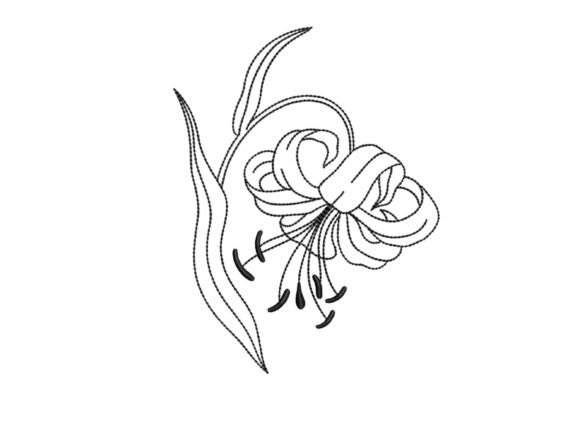
The product description calls it “gorgeous, delicate and sophisticated,” and after loading the embroidery file into my software, I have to agree. The lily lines are airy and graceful, with a sketch-like quality that feels both romantic and modern. It’s not a heavy, filled floral. It’s an outline — a whisper of a flower — which immediately tells me this design will thrive on light fabrics, subtle projects, and gifts where the stitching feels like an intentional, refined detail.
What Makes Lily Outline Feel So Special
My first impression was one of quiet elegance. The design doesn’t shout. It draws the eye with its slender stems, curved petals, and the kind of open, airy composition that invites personalization. I can easily picture a name, a date, or a short phrase nestled beside the flower. The mood is sweet but not childish, classy but not stiff. It’s the kind of handmade product detail that makes a customer say, “This was made just for me.”
Emotionally, Lily Outline sits in a beautiful sweet spot. It’s floral without being overly feminine, delicate without being fragile. For a personalized gift, that balance is gold. I can see it appealing to wedding guests, new parents, and anyone who appreciates a clean, botanical aesthetic. In my mind, it already belongs on a stack of linen napkins or peeking out from the corner of a baby blanket.
Where Lily Outline Will Shine Brightest
I’ve started mentally mapping out the products I’d offer with this design. Because it’s an outline, it works best when the fabric itself becomes part of the visual story. Here are the projects where I think Lily Outline will be a star:
- Baby embroidery on soft cotton blankets, muslin wraps, or onesies — the airy lines won’t overwhelm tiny garments.
- Wedding gift keepsakes, like a ring bearer pillow, a handkerchief, or a hoop art piece with the couple’s initials.
- Personalized towels — a single lily outline on a plush hand towel, paired with a monogram, feels instantly upscale.
- Nursery decor such as cushion covers, wall hangings, or crib sheets, where the design adds a hand-drawn charm.
- Custom tote bags and linen pouches — the lily becomes a subtle brand-like mark for a small shop.
- Aprons and kitchen textiles — a delicate floral accent near the pocket or hem brings a boutique feel.
- Pillow covers — imagine a pair of white linen pillows, each with a single lily in a soft sage green thread.
- Blanket embroidery on a larger scale, maybe repeated in a border or used as a central motif with a name.
For custom order previews and printable mockups, the light, sketchy nature of Lily Outline will photograph beautifully. The design won’t hide in shadows, and it won’t look like a heavy patch. That’s a real advantage when you’re selling online and need your product images to convey softness and quality.
When to Be Extra Careful With This Design
Every embroidery file has its personality, and an outline design like Lily Outline demands a little extra thought. I’ve learned that fine lines don’t always play well with certain surfaces. Here’s where I’ll be testing carefully before offering it to a customer:
- Small lettering placed too close to the lily — the delicate petals could get lost or visually compete with text.
- Textured fabrics like terry cloth towels — the loops can swallow the thin lines. I’ll use a topper or choose a smoother towel base.
- Thick towels and heavy knits — the design may sink in, so I’ll need the right stabilizer and possibly a double layer of wash-away topping.
- Stretchy baby clothes — the outline might distort if the fabric shifts. I’ll use a firm cut-away stabilizer and baste well.
- Curved surfaces like the edge of a bib or a small pouch — the design needs a flat, stable area to stitch cleanly.
- Dark fabric — the outline will require a thread color that contrasts gently but doesn’t look harsh. I’ll mock up several options.
- Frequent washing — on items like bibs or kitchen towels, I’ll test a sample through multiple cycles to see how the fine stitches hold up.
I’m not saying these are dealbreakers. Far from it. But as a shop owner, planning ahead prevents disappointment. I’d rather spend an hour on test stitches than remake a custom order.
How Lily Outline Elevates a Gift Product
There’s a direct link between a design’s aesthetic and a customer’s willingness to pay a premium. Lily Outline brings a hand-illustrated feel that instantly boosts perceived value. When someone sees this flower on a towel or a blanket, it doesn’t look like an off-the-shelf patch. It looks like a thoughtful, curated detail. That’s the sweet spot for handmade quality and emotional connection.
I find that designs like this also increase what I call “giftability.” The recipient is more likely to keep and use the item because the embroidery feels personal, not generic. For a personalized gift shop, that’s everything. Lily Outline will help my products feel like heirlooms, even if they’re a simple kitchen towel. And on the selling side, the design’s airy style photographs well for Etsy listings and social media — it catches light, doesn’t cast heavy shadows, and pairs beautifully with props like dried flowers and natural linen.
I’m already planning how to use this design in my craft fair products. A single lily on a set of lavender sachets? Yes. A cluster of three lilies across the top of a journal cover? Absolutely. The design invites creativity without demanding a complicated setup.
Practical Stitching Notes From My Test Planning
Before I add Lily Outline to my permanent collection, I’ll run through a few non-negotiable steps. I recommend every small shop product stitcher do the same, especially with delicate outline designs.
Thread Color Choices and Contrast
I plan to stitch the lily in soft, muted tones — think sage, dusty rose, pale gold, or even a lightweight metallic for wedding pieces. Because the lines are thin, a high-contrast thread on a dark fabric can look stark. On the other hand, a tone-on-tone approach on light linen gives a subtle, watermark effect that’s incredibly elegant. I’ll test a few combinations on scrap fabric before committing.
Stabilizer and Hoop Setup
For most projects, I’ll use a medium-weight cut-away stabilizer on garments and a tear-away on flat items like pillow covers. If I’m stitching on a thick towel, I’ll add a wash-away topping to keep the loops from poking through. The hoop size needs to fully accommodate the design without crowding the edges — I always check the design’s dimensions and leave at least an inch of extra space around the stitching area.
Stitch Density and Small Details
My software shows the outline is composed of single or double running stitches, which means the stitch density is light. That’s perfect for a soft drape but means I need to be extra careful with sharp curves and points. I’ll watch the lily’s petal tips during a test run to make sure the machine doesn’t skip or create tiny gaps. If I see any issues, I’ll slightly enlarge the design or adjust the tension.
Light vs. Dark Fabric Mockups
I always create a quick digital mockup to see how the finished product will look on both light and dark backgrounds. Lily Outline almost disappears on bright white unless I use a very light thread, and it can pop too aggressively on black if the thread is too shiny. I’ll find the sweet spot and take photos for my listings so customers can see realistic options.
Commercial Licensing and File Details
The product description mentions the design comes with multiple emb — I’m assuming that means multiple file formats, which is a huge help for different machine brands. However, I’ll need to confirm the hoop size requirements, exact stitch count, and most importantly, the commercial embroidery license. Before selling any finished item with Lily Outline, I’ll verify that the license allows me to use it on products for profit. That’s a step I never skip, and I strongly advise other Etsy sellers to do the same.
Who Will Love This Design
I imagine the typical customer for a Lily Outline product is someone who appreciates custom embroidery that feels light, intentional, and botanical. They might be shopping for a baby shower gift, a wedding anniversary, or a housewarming present. They’re drawn to natural textures, muted color palettes, and the kind of personalized gift that doesn’t need to scream to be noticed. This design fits perfectly in that niche.
For my shop, I’ll position Lily Outline as a “signature floral” — a design that customers can request on almost any product, from a nursery blanket to a linen apron. Its versatility as a Single Flowers design means I can keep a cohesive look while offering endless personalization. I might even create a coordinating set with other outline flowers from the same Embroidery collection.
Final Thoughts Before the First Stitch-Out
I’m genuinely excited to bring Lily Outline into my product lineup. The design’s delicate, sophisticated personality aligns perfectly with the kind of handmade product I love to sell. It’s a design that will make a baby embroidery blanket feel like a legacy piece, and a simple towel feel like a boutique find. As long as I respect its fine lines, choose fabrics wisely, and test thoroughly, I know this digital embroidery file will become a quiet workhorse for my shop.
For now, I’ll be running my test stitch on a soft cotton quilt and a linen napkin, tweaking thread colors and checking the wash test. I’ll let the design’s delicate charm speak for itself, and I’m confident my customers will hear it.